




Origins of the Symposium Preserving the Spirit, Giving Life through the Hands

Moved to Life began with a concern for traditional puppetry. Chinese puppetry spread overseas with the migration of Chinese communities and took root in Malaysia, yet it has gradually faced a growing rupture in transmission. Once a tradition leaves its place of origin, how can a craft continue in a new environment and give rise to new possibilities?

From this starting point, our exploration extends to the artists who preserve and animate the spirit of these traditions through their hands. Those who preserve are preserving the spirit of tradition; those who animate are bringing the puppets to life with their hands. With the changing times, traditional crafts can sometimes appear to be gradually fading from contemporary life. This symposium therefore invites us to consider: when tradition enters different places, generations, and cultural contexts, how can we remain connected to its roots while allowing it to grow in new environments? And in this process, what kind of dialogue can unfold between inheritance and innovation?

Moved to Life The Shared Life of the Puppet and Puppeteer

From shadow puppetry to the many other forms of puppet theatre, these precious forms of intangible cultural heritage are, for many traditional puppeteers, far more than technical skills. Instead, they have become deeply intertwined with their lives and personal journeys.

The movement of a puppet is not simply a display of technical skill but an act of Moved to Life—a process through which puppeteers bring their experiences, emotions, and memories into the puppet, allowing them to emerge through performance. There exists an ineffable bond between puppet and puppeteer: the puppet becomes an extension of the puppeteer's life, while the act of puppeteering becomes a way for the puppeteer to find meaning, connection, and a sense of belonging.

Unlike typical events centred primarily on watching performances, this symposium brings artists who have long worked behind the scenes onto the stage and share their own journeys—how they began on this journey, the solitude and challenges they encountered along the way, and the reasons they remained steadfast in preserving and passing on their craft despite the passage of time. Through these stories and dialogues, the symposium seeks to bring the voices and experiences of those who have long remained behind the scenes back into the light, allowing audiences to glimpse the artists’ life journeys, the challenges they have faced, and the dedication and commitment that have sustained these traditions.

Mission From Performance to Dialogue

Positioned as an international performing arts symposium, Moved to Life posits that performance itself is a way of producing knowledge and opening up new forms of discourse. It also embraces the spirit of the word symposium—a gathering for shared dialogue—through in-depth post-performance exchanges that allow artists, audiences, and researchers to meet on equal ground, moving beyond the one-way transmission of knowledge towards a more open and reciprocal dialogue.

Over two days, the symposium centres on two themes: Roots and Resonance and Local Revival and Global Vision. Through performances, panel discussions, artist dialogues, workshops, and documentary screenings, the symposium creates a cross-cultural and intergenerational platform for exchange, dialogue, and new possibilities in puppetry.

Symposium Highlights

  • A cross-cultural showcase bringing together four forms of puppetry on stage: shadow puppetry, string puppetry, iron-rod puppetry, and hand puppetry.
  • A tribute to veteran puppeteers, offering audiences an opportunity to hear them share their lifelong journeys with puppetry.
  • The first major international gathering of Teochew iron-rod puppeteers from across Asia, featuring performances and traditional “puppet battle” scenes.
  • Documentary screenings and workshops led by international master puppeteers.
  • Joint performances and exchanges featuring both traditional and contemporary puppeteers.

Vision

Moved to Life is concerned not only with how a tradition can be preserved but also with how that tradition remains a living form of culture as it continues to be performed, remembered, and reimagined.

Through this symposium, we hope to bring visibility to the hands and spirits that have long remained behind the scenes, to create encounters between puppeteers across regions and generations, and to allow tradition to do more than simply survive but continue to grow through new exchanges and creative endeavours. Tradition has never been a static legacy. It lives in the hands of the puppeteer, in every movement of the puppet, in every performance on stage, and in the conversations that continue to unfold between people.

This encounter begins with the first gathering of Teochew iron-rod puppeteers. With Moved to Life as our starting point, we look back towards the roots of Asian puppetry while also turning towards its future that has yet to be written. We cordially invite you to enter the world of puppetry, to witness how a pair of hands can bring a puppet to life, and to consider together: When tradition is brought to life again, where might it move next?

Key Visual Identity

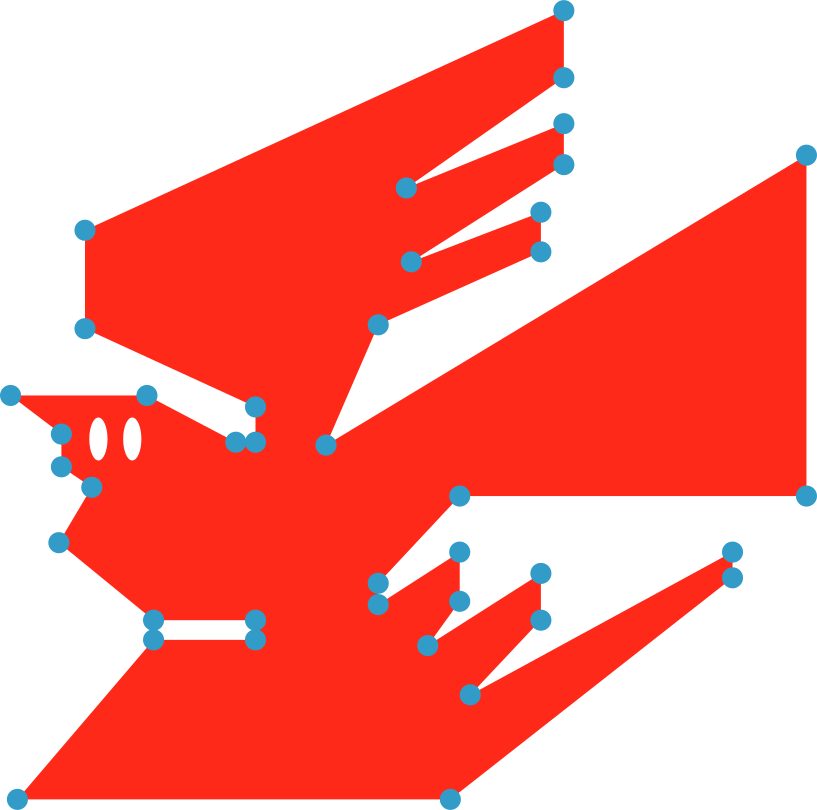
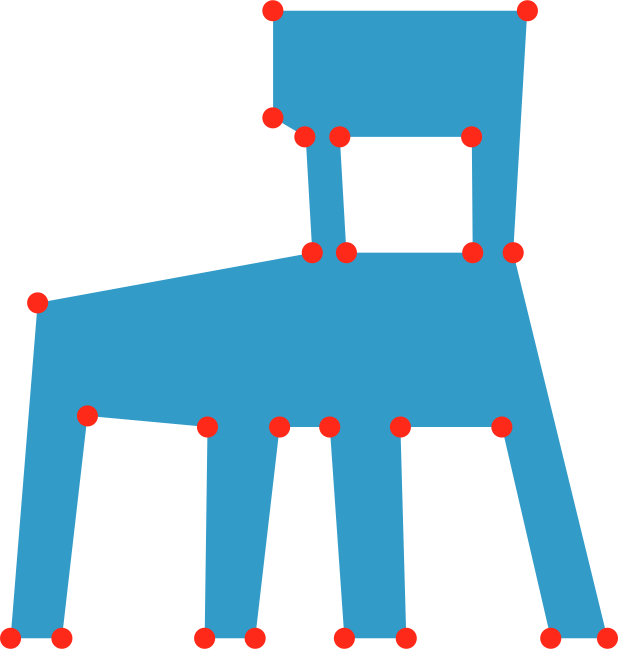
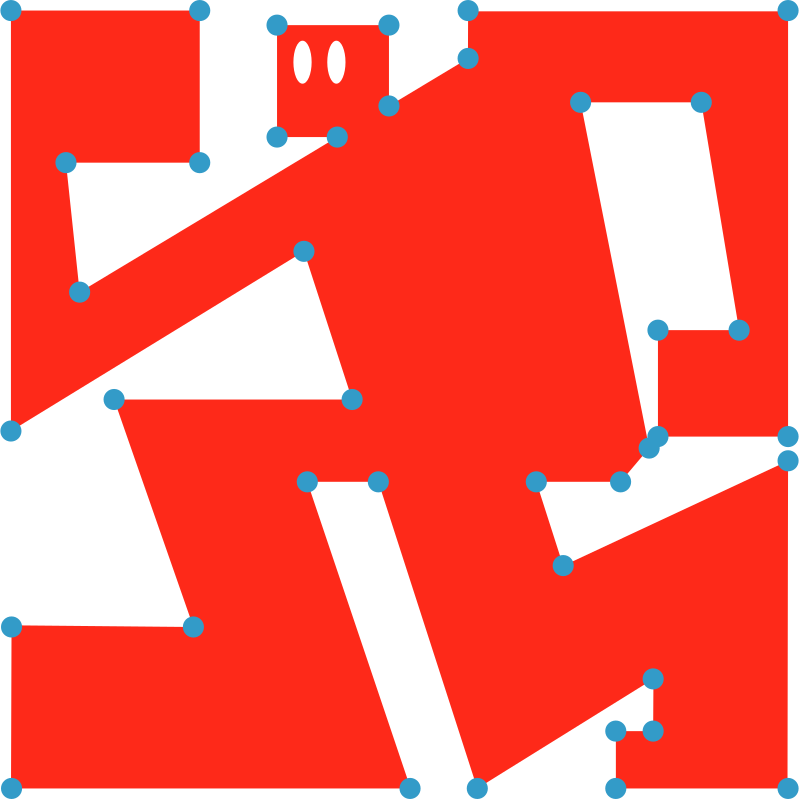
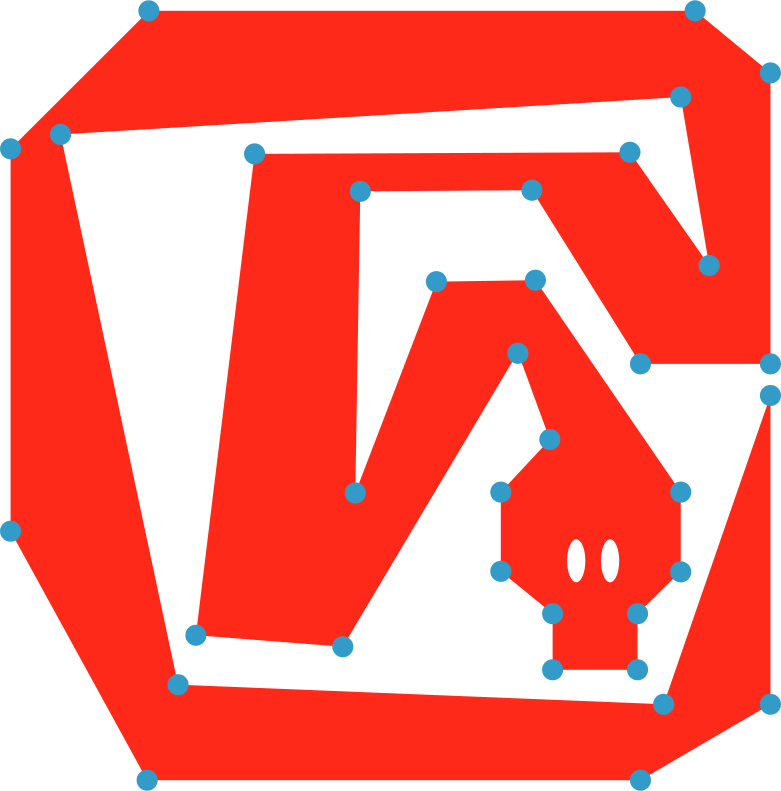
Tradition and contemporary practice are often framed as opposites. For Moved to Life, an international symposium exploring tradition and reinvention in Asian puppet theatre, we wanted to challenge this separation and explore what happens when one form becomes another.

The key visual brings these worlds together through two colour systems. Red evokes traditional puppetry, including humans, animals, and spirits, while blue draws inspiration from contemporary object theatre, where anything from a torchlight to a drop of liquid can enter the performance, not necessarily transformed into a puppet, but activated as an object in its own right. Within each system, forms continuously shift, merge and evolve, echoing the fluid gestures of a puppeteer bringing different characters to life.

Where the two systems meet, new possibilities emerge. Unrelated forms begin to suggest connections, characters, and stories in the space between them. The colours overlap to create a third colour, belonging fully to neither system but emerging from both.

The title itself follows the same principle. Its forms bend, shift, and transform at their joints, resisting any single, fixed interpretation. Like a puppet in the hands of its maker, the visual identity is never static. It exists in a state of transformation, always moving between forms and always being moved to life.

Organiser

Teochew Puppet and Opera House

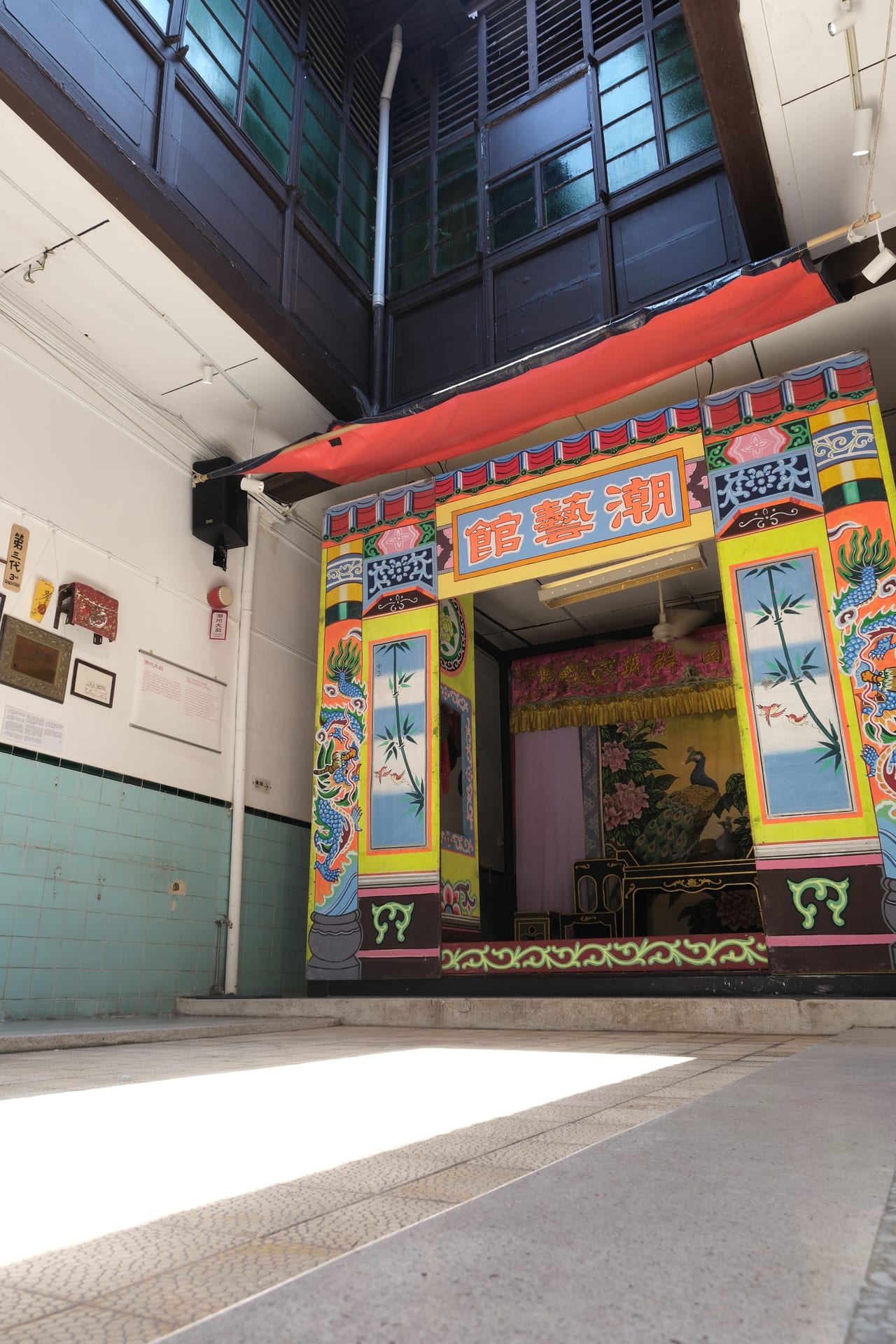
The Teochew Puppet and Opera House (TPOH) was established in 2014 and is located within the Mor Hun Villa (慕韩别墅) at 122 Lebuh Armenian in George Town UNESCO World Heritage Site. Mor Hun Villa was established in the early 20th century by Teochew pioneers and served as a social and cultural gathering place for Teochew merchants and community members in northern Malaya. In 1930, the present property was acquired by Lim Lian Teng, a prominent Teochew businessman, and subsequently made available to Mor Hun Villa for use as its clubhouse.

The Teochew Puppet and Opera House is the first cultural space in Malaysia dedicated to the integration of Teochew iron-rod puppetry and Teochew opera. Its activities focus on arts education and outreach, the transmission and preservation of traditional performing arts, interdisciplinary artistic creation, and international cultural exchange. The venue houses a collection of opera costumes, props, and puppets, and introduces the public to Teochew opera and iron-rod puppetry through guided tours, performances, exhibitions, and educational programmes. It also actively supports the continued transmission and practice of these traditional art forms.

The Teochew Puppet and Opera House also hosts the international performing arts symposium “Moved to Life” (心生偶动), which brings together traditional opera, puppetry, and contemporary performing arts through forums, performances, lectures, and cultural exchange activities. The symposium provides a platform for artists, researchers, and cultural practitioners from different regions to exchange ideas.
Artistic leadership

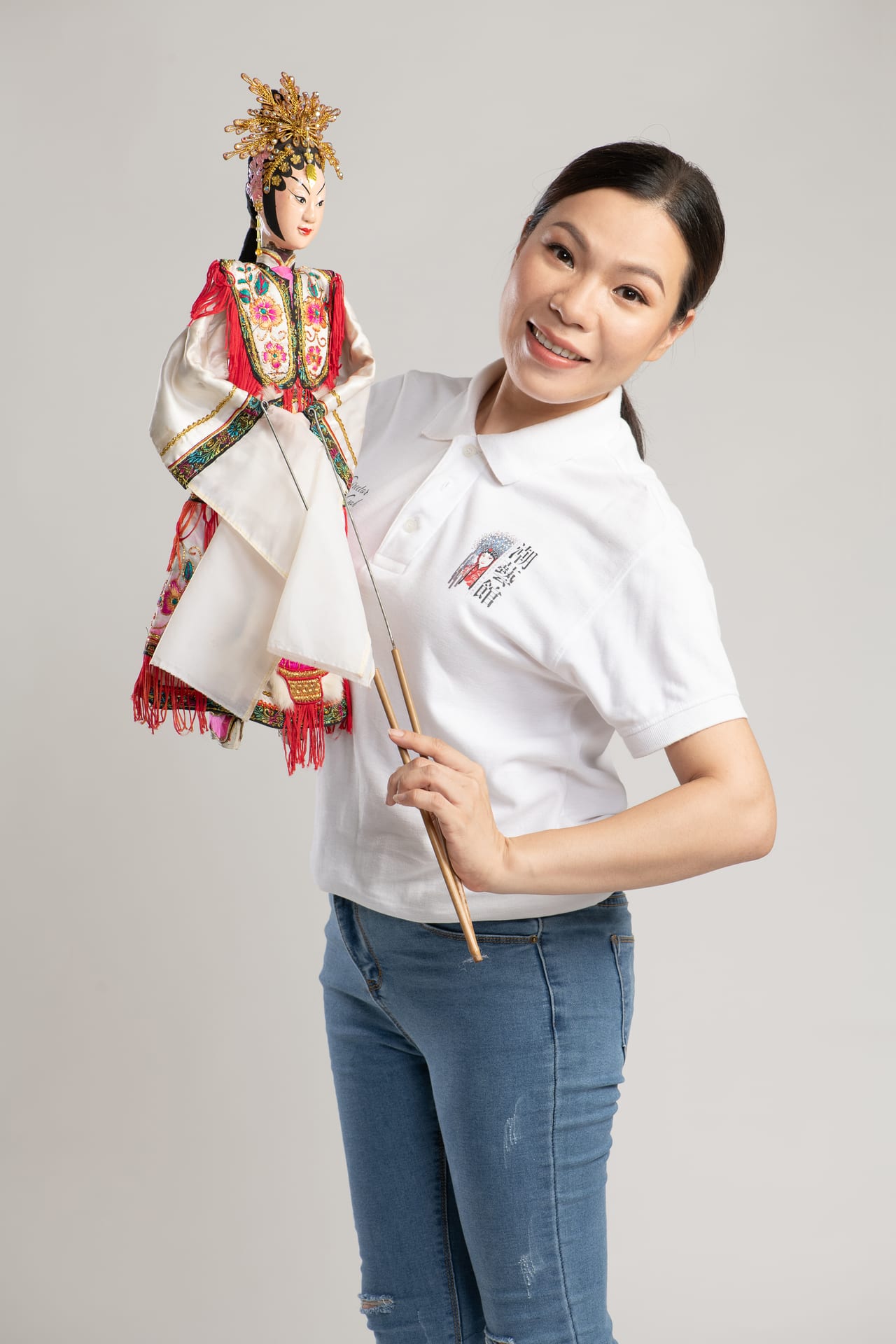
Ling Goh

TPOH’s Artistic Director

Ling Goh

Ling Goh is a prominent advocate for the transmission and transformation of Teochew opera and puppetry in Malaysia. Born into a century-old family of opera performers, she is the fourth-generation heir to the family tradition and an overseas disciple of Yao Xuanqiu, a National-Level Representative Inheritor of the Intangible Cultural Heritage of Teochew Opera in China. She is highly skilled in Teochew opera performance, iron-rod puppetry, and traditional opera music, including percussion and yangqin. For many years, she has been dedicated to the transmission, innovation, and contemporary transformation of traditional opera and street puppetry, promoting the development of these artistic practices towards greater modernisation, branding, and systematisation.

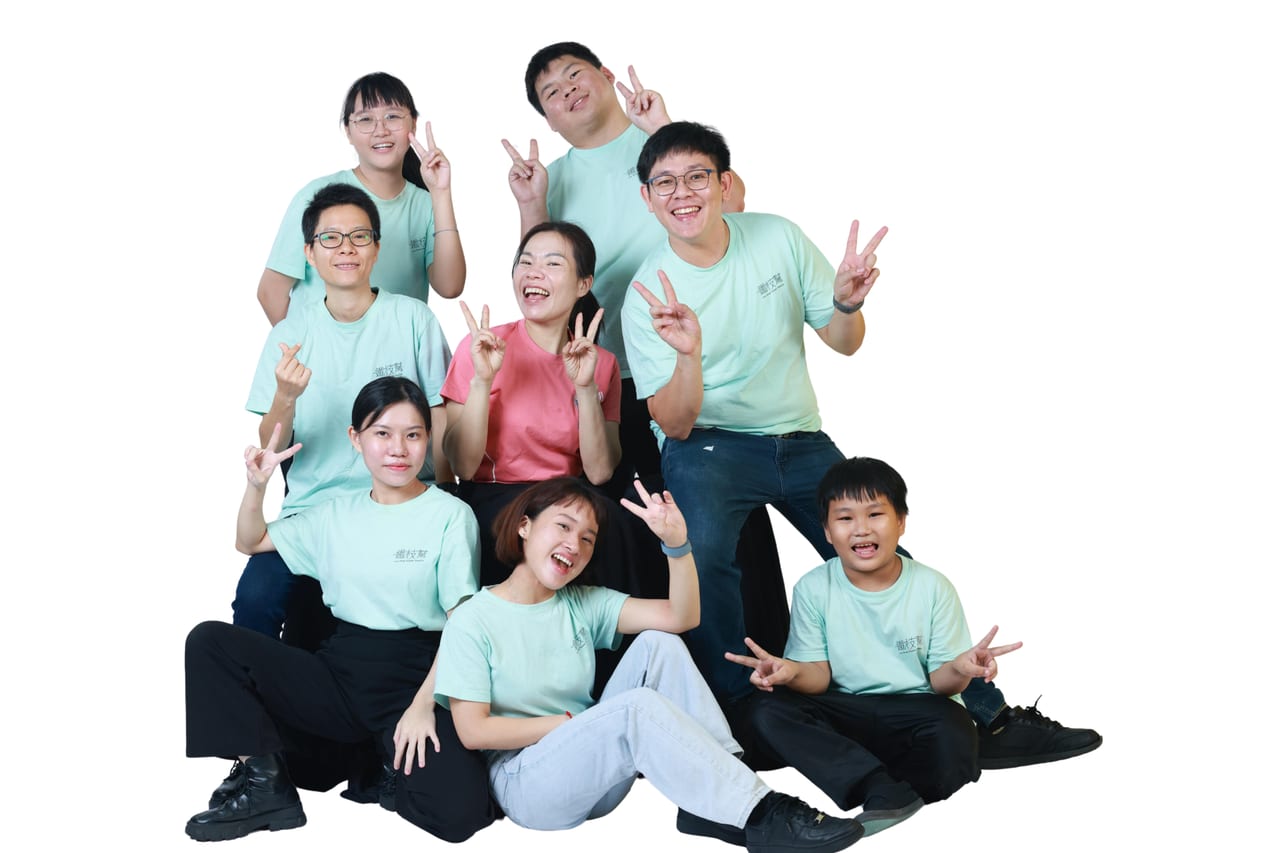
Ling Goh currently serves as the founder and artistic director of the Teochew Puppet and Opera House, the founder and artistic mentor of the Malaysian Teochew Arts Heritage Centre, and the founder of “Iron Gang Puppet Theatre” (铁枝帮), a contemporary iron-rod puppet troupe.

Over the years, she has actively established professional training systems, promoted audiovisual documentation and 3D spatial digitisation and archiving of traditional performing arts, and continuously explored interdisciplinary practices that bring traditional iron-rod puppetry into dialogue with contemporary theatre. One such project is IBU, which was developed through the collaboration of Ling Goh, theatre director Ling Tang, and art director and dramaturg Stephen Teoh, among others. The production took two and a half years to explore and create, bringing together the performance techniques of traditional iron-rod puppetry with the visual, textual, and theatrical languages of contemporary theatre. It reflects Ling Goh’s continuous exploration between the transmission of traditional art and contemporary creative practice.

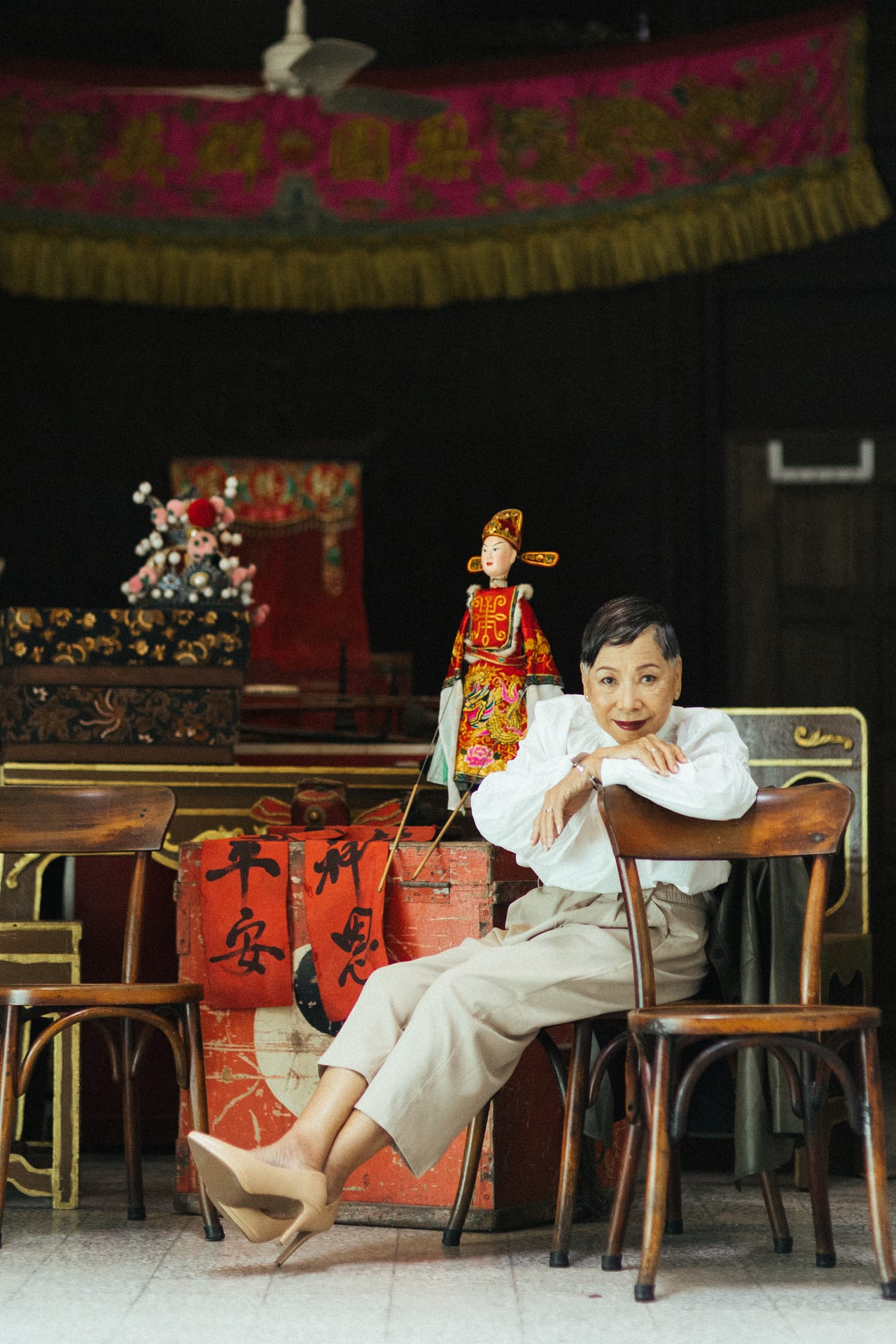
Toh Ai Hwa

TPOH’s Artistic Advisor

Toh Ai Hwa

Toh Ai Hwa is an important practitioner and bearer of Teochew iron-rod puppetry in Malaysia. She currently serves as the founder of the Kim Giak Low Choon Teochew Puppet Troupe and the artistic advisor of the Teochew Puppet and Opera House. As the third-generation inheritor of her family tradition, she has been active in the performing arts for more than six decades, with extensive experience in Teochew opera singing, iron-rod puppetry, and traditional percussion. As a female percussionist, she plays a vital role in controlling the musical rhythm and coordinating closely with the puppet performances.

Since founding the Kim Giak Low Choon Teochew Puppet Troupe in 1989, Toh Ai Hwa has remained actively involved in the transmission and development of the troupe, continuing to practice and preserve these traditional art forms during a period when traditional opera and puppetry faced significant challenges in intergenerational transmission. In recent years, the troupe has also incorporated electronic subtitles and modern stage technology, and is exploring the concept of a “living museum” as a means of preserving and presenting traditional puppetry.

Toh Ai Hwa has received several significant recognitions for her contribution to cultural heritage and artistic transmission. She received the “Living Heritage Treasure of Penang” award from the Penang Heritage Trust (PHT) in 2008; the “Lifetime Achievement Award – Dedication on Knowledge Transmission” from the George Town World Heritage Incorporated (GTWHI) in 2020; and the “Anugerah Tokoh Seni Negeri Pulau Pinang” award from the Penang branch of the National Department of Culture and Arts (JKKN Penang) in 2025.

In 2026, Toh Ai Hwa was named in the Malaysian “National Living Cultural Heritage”(Warisan Kebangsaan Orang Hidup, WAKOH) list, receiving national-level recognition as an important living bearer of cultural heritage. The recognition represents one of the most representative national honours for cultural transmission in Malaysia of individuals who play a significant role in transmitting the country’s cultural heritage.

Contemporary troupe

Iron Gang Puppet Theatre

Iron Gang Puppet Theatre

Iron Gang Puppet Theatre (铁枝帮) was established in Penang in 2022 and is Malaysia’s first contemporary iron-rod puppetry troupe dedicated to exploring the aesthetics and performance vocabulary of iron-rod puppetry. Founded by Ling Goh, a fourth-generation practitioner of traditional iron-rod puppetry in Malaysia, the troupe strives to explore the aesthetics, physical movement, performance vocabulary, and visual forms of iron-rod puppetry. It also considers the possibilities for the development of this traditional puppetry within the context of contemporary theatre.

Iron-rod puppetry originated in Chaozhou, China, and forms an important part of traditional Teochew opera and puppetry. With changes in the social environment and performance landscape, the transmission and practice of traditional iron-rod puppetry have also encountered new challenges. Iron Gang Puppet Theatre (铁枝帮) builds on traditional techniques while exchanging ideas with contemporary theatre and other artistic disciplines. Through creative projects, performances, workshops, and practitioner training, the troupe explores diverse ways of presenting iron-rod puppetry on the contemporary stage and promotes the understanding and learning of traditional puppetry techniques among a new generation of puppeteers.

The work of Iron Gang Puppet Theatre (铁枝帮) is not limited to the reproduction of traditional plays but rather uses movements, performance techniques, visual language, and performer–puppet relationships inherent in iron-rod puppetry as the starting points for creative exploration, seeking new connections between tradition and contemporary practice.

Venues

Penang Institute

Penang Institute

10, Jalan Brown, George Town, 10350 George Town, Penang.

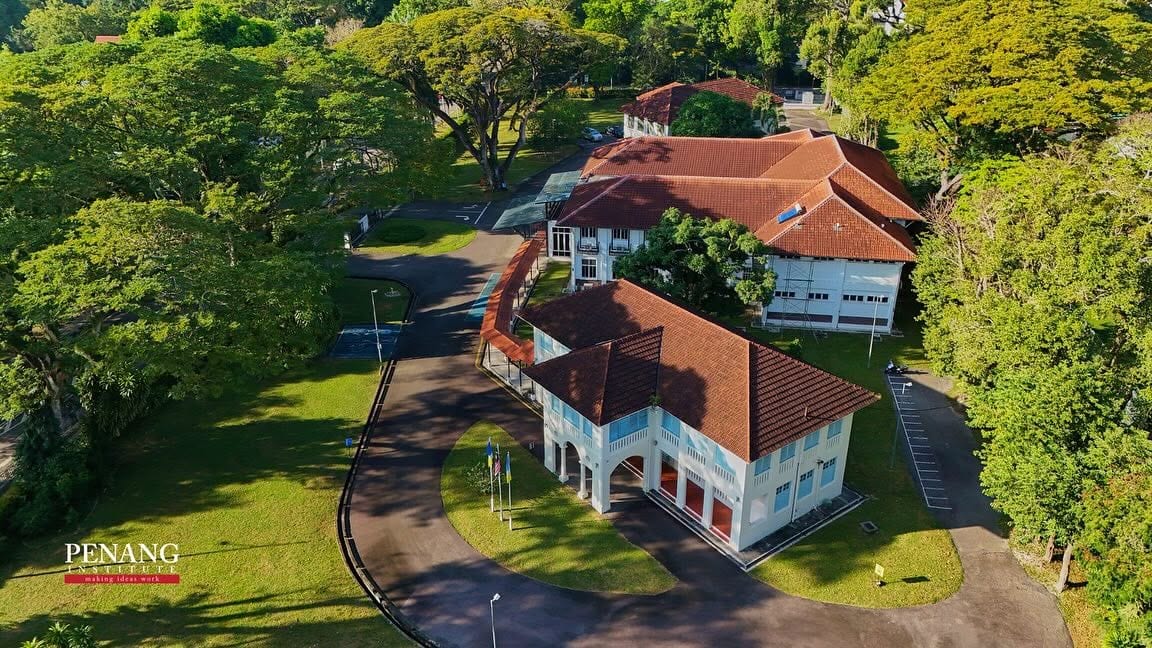
Penang Institute was established in 1997 as the Socio-Economic and Environmental Research Institute (SERI) and was renamed Penang Institute in 2011. Guided by the motto “Making Ideas Work,” the institute conducts research in public policy, socio-economic development, culture, and related fields. Through its research, publications, forums, and exchange events, the institute facilitates interdisciplinary knowledge exchange and contributes to public discourse.

The international performing arts symposium “Moved to Life” (心生偶动) will be held at Penang Institute, providing a space for artists, researchers, and cultural practitioners from different regions to engage in dialogue and discussion. The symposium also expands the conversation between performing arts and other fields of knowledge.

Armenian Park

Armenian Park

95, Lebuh Armenian, George Town, 10300 George Town, Penang.

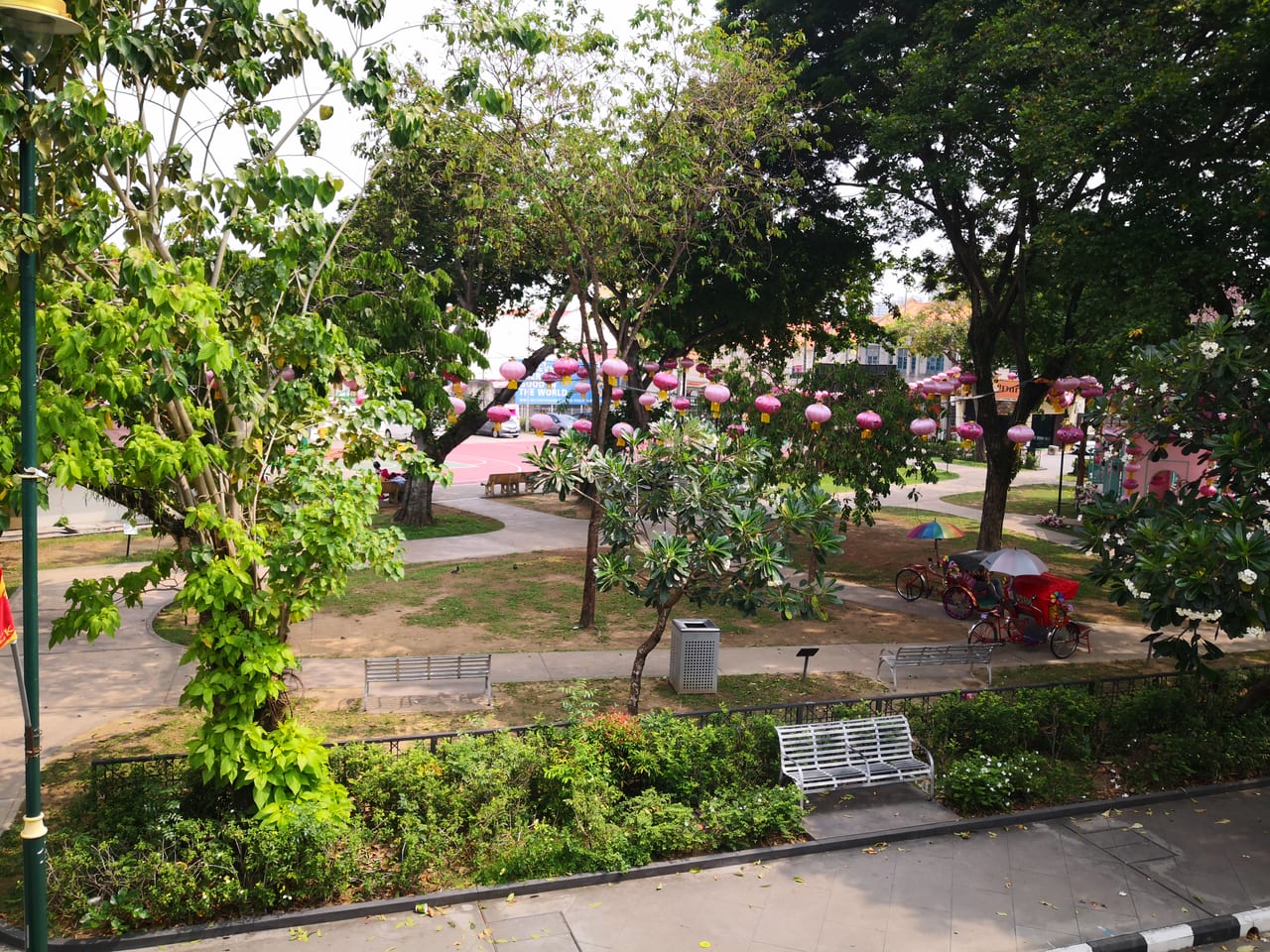
Located in the heart of the George Town UNESCO World Heritage Site, Armenian Park serves as an open public space for local residents and tourists to relax and participate in community activities. Following its revitalisation, the park received an award of excellence from the Malaysian Institute of Planners (MIP) and has become an important public space within the historic urban landscape.

As part of the international performing arts symposium “Moved to Life” (心生偶动), an outdoor performance will be held at Armenian Park, bringing traditional puppetry into the public spaces of George Town’s historic district. This creates opportunities for direct engagement with the local community and the wider public, while allowing audiences to experience traditional puppetry within the distinctive cultural and historical setting of George Town.

Teochew Puppet and Opera House

Teochew Puppet and Opera House

122, Lebuh Armenian, George Town, 10200 George Town, Penang.

For details, see the Organiser: Teochew Puppet and Opera House introduction above.

The people behind Moved to Life will be introduced here soon.